
Platform Engineers: 5 Step Migration Checklist for Kong vs Apigee
Platform engineers' practical comparison of Kong vs Apigee: operations, performance, AI and multi cloud readiness, plus a 5 step migration checklist.

Choose Kong when you need Kubernetes-native, multi-cloud control over your gateway infrastructure; choose Apigee when you need a fully managed, GCP-native platform with deep API lifecycle tooling. The trade-off comes down to who owns the operational burden: your platform team, or Google's. Performance, pricing, and migration paths in the sections below explain why.
TL;DR:
- Kong offers flexible deployment options across multiple clouds and on-premises butrequires significant infrastructure management, especially database tuning at scale.
- Apigee provides a fully managed control plane tied to Google Cloud, reducing operational burden but increasing cloud dependency for hybrid setups.
- Kong generally delivers better raw throughput and lower latency for straightforward proxy workloads, while policy-rich use cases favor Apigee's processing depth.
- Costs for Kong can escalate with the need for in-house database and Kubernetes management, whereas Apigee’s predictable pricing favors teams with less dedicated infrastructure talent.
- Phased migration and detailed policy mapping are essential to minimize risks when switching between platforms, with a focus on real traffic testing before full cutover.
Table of Contents
- Kong vs Apigee: The Head-to-Head Snapshot
- How Do Deployment Models and Architecture Differ?
- Which Platform Performs Better Under Load?
- What Do You Actually Get for the Price?
- What Does Total Cost of Ownership Really Look Like?
- How Should You Approach Migration and Integration?
- Which Platform Should You Actually Shortlist?
- How LogicBranch Approaches API Gateway Projects
- Why Most Kong vs Apigee Comparisons Miss the Point
- Sources
Kong vs Apigee: The Head-to-Head Snapshot
Here's the comparison IT teams actually need before they schedule vendor calls.
- Deployment model: Kong runs anywhere (OSS, self-managed, or Konnect SaaS); Apigee's control plane lives on Google Cloud.
- Control-plane location: Kong lets you self-host or use Konnect; Apigee's control plane stays coupled to GCP even in hybrid mode.
- Latency profile: Kong tends to run leaner on raw proxy throughput; Apigee trades some speed for policy depth.
- Enterprise features: Both gate advanced capabilities behind paid tiers, but the packaging differs sharply.
- Extensibility model: Kong uses Lua/Go plugins; Apigee uses XML and Java policy chains.
- Operational burden: Kong demands more infrastructure ownership; Apigee absorbs more of that into its managed runtime.
- Best-fit use case: Kong suits Kubernetes and multi-cloud teams; Apigee suits GCP-committed enterprises wanting full lifecycle management out of the box.
How Do Deployment Models and Architecture Differ?
Apigee X runs its control plane on Google Cloud, and even Apigee's hybrid deployment mode keeps core control-plane dependencies tied to GCP services. If your organization already lives in Google Cloud, that's a feature. If you're running workloads across AWS, Azure, and on-prem clusters, it's friction you'll feel every time you touch identity, logging, or billing integrations.
Kong takes the opposite bet. You can run the open-source gateway yourself, deploy self-managed data planes wherever your workloads live, or hand control-plane operations to Kong's Konnect SaaS offering while keeping data planes distributed. That flexibility comes with a catch: Kong's shared-state architecture depends on Postgres or Cassandra, and at scale that database layer needs real tuning attention or it becomes a coordination bottleneck, according to Api7. Apigee hides that complexity inside its managed runtime, but you inherit dependency on Google's infrastructure instead.
- Apigee: less to operate, more to depend on.
- Kong: more to operate, more control over where things run.
- Both require real skill investment: Kubernetes and database operations for Kong, GCP IAM and networking fluency for Apigee.
Pro Tip: Before committing to either platform, map out which team actually owns database operations day-to-day. If nobody on your platform team wants to own Postgres tuning, that alone should weigh heavily toward a managed control plane.
Which Platform Performs Better Under Load?
Independent benchmarks generally favor Kong on raw throughput and latency for straightforward proxy workloads. API7.ai's analysis found Kong consistently posting lower latency and higher requests-per-second numbers in head-to-head tests, while Apigee's heavier policy engine adds processing overhead in exchange for lifecycle depth.
Where the latency actually comes from: GigaOm's benchmark work on API and microservices management platforms points to policy engine complexity, specifically Java and XML policy chaining, as a major latency contributor on heavier gateways. Kong's Lua-based plugin model running atop NGINX tends to add less per-request overhead than Apigee's policy chains.
That gap matters most under specific conditions:
- High-volume, low-latency APIs (payments, real-time bidding, mobile backends) tend to favor Kong's leaner proxy path.
- APIs where policy richness (complex transformations, quota logic, monetization rules) outweighs raw speed tend to favor Apigee.
- Kong's horizontal scaling pattern relies on stateless nodes talking to a shared database, so scaling out means scaling your DB tier too, not just adding gateway instances.
If your SLA targets sit in single-digit millisecond p99 territory, that policy-engine overhead on Apigee is worth testing under your actual traffic shape before you sign anything, not after.
What Do You Actually Get for the Price?
Kong's plugin ecosystem covers rate limiting, authentication, and transformation out of the box, but advanced plugins and enterprise-grade capabilities typically require a paid Kong license once you move past the open-source core. Apigee's policy-driven model bundles more lifecycle tooling (analytics, developer portals, monetization) directly into its paid tiers.
- Common enterprise features gated on both platforms: advanced rate limiting, OpenID Connect integration, detailed usage analytics, monetization and billing hooks.
- Kong's extensibility path: write or install a plugin, mostly in Lua, with a growing set of Go-based options.
- Apigee's extensibility path: author XML or Java policies inside a more structured, opinionated pipeline.
- Developer experience: Kong's configuration lends itself to GitOps workflows and declarative YAML; Apigee's tooling leans more toward its own proxy bundles and UI-driven policy design.
Pro Tip: Ask any vendor demo to show you the exact plugin or policy you'd need for your top three use cases, not a generic rate-limiting example. That's where the "enterprise tier required" surprises usually hide.
What Does Total Cost of Ownership Really Look Like?
Apigee's pricing shape is more predictable: you're paying for a managed consumption model with fewer surprise infrastructure line items. Kong's open-source core looks cheaper upfront, but the real cost shows up in what you have to run yourself.
- Kubernetes cluster operations, database management (Postgres or Cassandra), and network egress all land on your team's plate with self-managed Kong.
- Konnect shifts some of that back to Kong as a managed control plane, narrowing the cost gap with Apigee.
- Support SLAs differ by tier on both platforms, and Gartner's customer reviews flag real variance in support responsiveness depending on which tier you're on.
- Cost-sensitive teams with strong platform engineering talent tend to do better with Kong; feature-sensitive teams without deep infrastructure staff tend to do better with Apigee's managed overhead absorption.
How Should You Approach Migration and Integration?
Whether you're moving off Apigee toward Kong, or the reverse, run both gateways in parallel rather than cutting over in one move. Migration case studies consistently favor phased approaches over big-bang cutovers.
- Start with non-critical, low-traffic APIs to validate your policy mapping before touching anything customer-facing.
- Map each existing policy (rate limits, auth, transformations) to its equivalent construct on the new platform, and document any gaps explicitly.
- Run both gateways in production-like load for at least a week, watching SLOs closely before promoting traffic.
- Migrate incrementally by consumer group, not by backend service, so you can roll back a single client segment if something breaks.
- Confirm CI/CD pipelines, identity provider integrations, and observability exports all point to the new gateway before decommissioning the old one.
Pro Tip: Keep your old gateway running in read-only observation mode for at least two full billing cycles after cutover. Latent traffic patterns (batch jobs, quarterly reports) have a habit of surfacing exactly when you've stopped watching.
Which Platform Should You Actually Shortlist?
If your team runs Kubernetes across multiple clouds or on-prem environments and owns strong platform engineering talent, shortlist Kong and pilot it against your highest-traffic, lowest-complexity API first. If you're deeply committed to Google Cloud and need integrated analytics, developer portals, and monetization without building them yourself, shortlist Apigee.
If neither fits, look sideways: alternatives like Zuplo or Apache APISIX exist for teams wanting managed simplicity without cloud lock-in, or fully open governance instead.
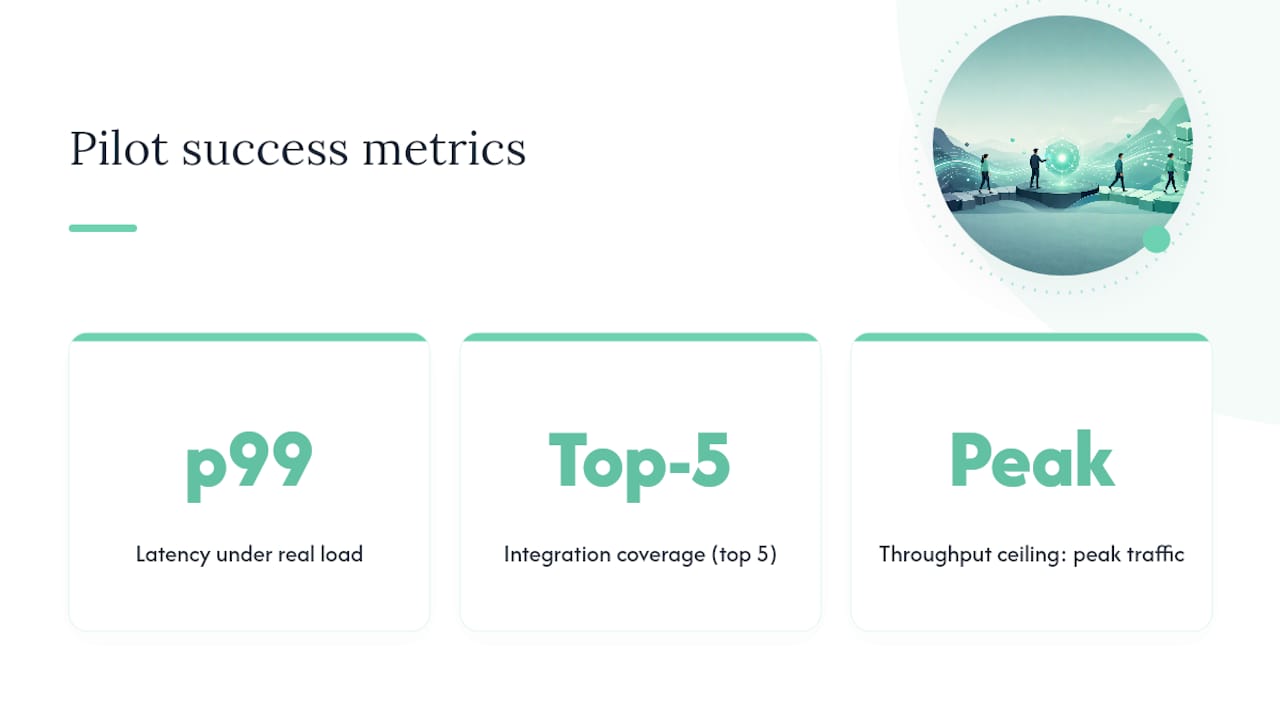
For your pilot, set concrete success metrics upfront: target p99 latency under real load, integration coverage across your top five consumer endpoints, and a throughput ceiling that matches your peak traffic, not your average.
How LogicBranch Approaches API Gateway Projects
Choosing between Kong and Apigee is rarely the hard part. The hard part is knowing which policies, integrations, and SLOs actually matter for your specific traffic and compliance posture, and that takes hands-on architecture work, not a spec sheet comparison.
Logicbranch's evaluation checklist for any gateway decision covers four things: current and projected traffic shape, existing cloud commitments, in-house platform engineering capacity, and compliance requirements around data residency. If you want a second opinion before committing budget to either platform, Logicbranch can run that assessment alongside your team.
Why Most Kong vs Apigee Comparisons Miss the Point
Most comparisons treat this as a feature checklist exercise: count the plugins, tally the certifications, pick a winner. That's backwards. The real question is which operational model your organization can sustain for the next three years, not which platform wins a benchmark this quarter.
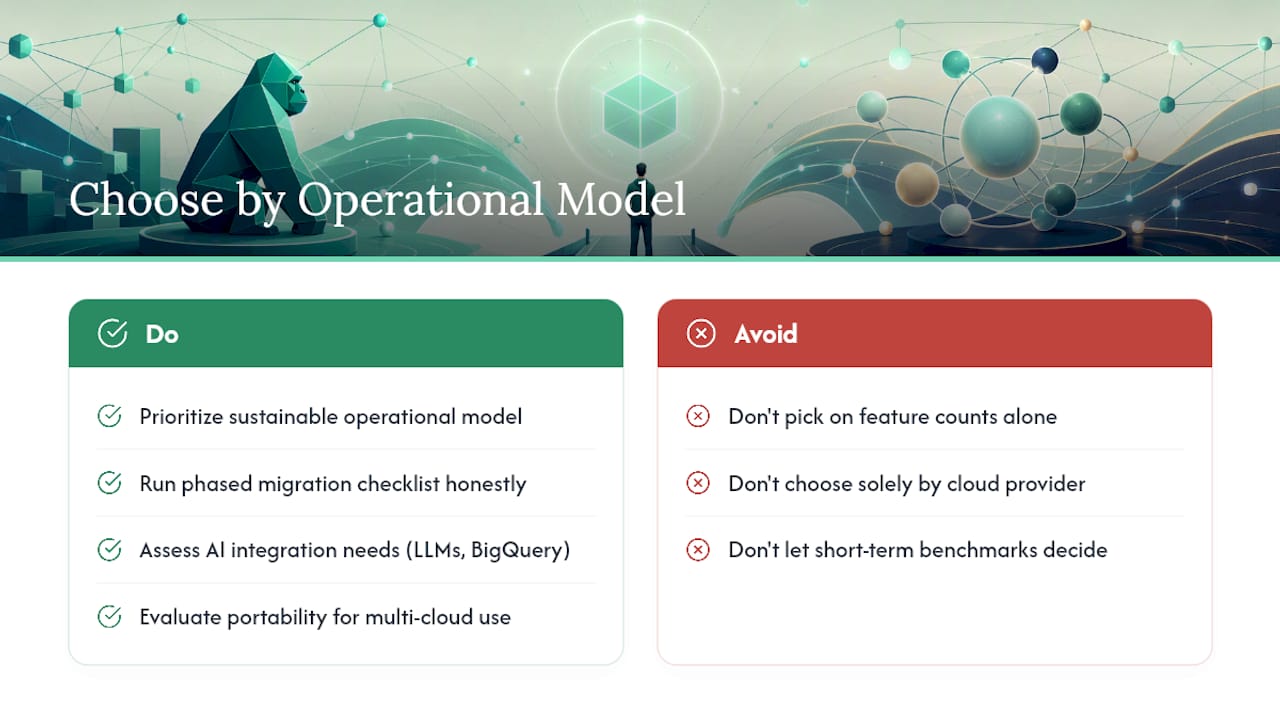
The conventional advice, "pick based on your cloud provider," is too simplistic. GCP-committed teams do lean Apigee, but plenty of GCP-native companies run multi-cloud data pipelines that make Kong's portability the smarter long-term bet regardless of where their compute currently sits. The AI angle sharpens this further: native GCP integrations with Vertex AI and BigQuery genuinely speed up implementation for Apigee shops already in that ecosystem, but teams building LLM-driven API products across multiple providers will find Kong's plugin model far less constraining.
What I'd prioritize first, above pricing, above benchmarks: run the phased migration checklist against your current setup honestly, even if you're not migrating yet. It exposes exactly how coupled you already are to one vendor's assumptions, and that's the number that should drive your shortlist, not last quarter's throughput chart.
— Josh
Sources

API-First Design: What It Is and How to Apply It
API-first design means agreeing the API contract before building anything. See how it works, when it beats code-first, and how Australian businesses can use it.

Tokenization vs Encryption: How to Choose for Your Data
Tokenization and encryption protect data in different ways. Learn how each works, how they compare with masking and hashing, and which fits your Australian business.